Swisscom is blue, white, red - and green

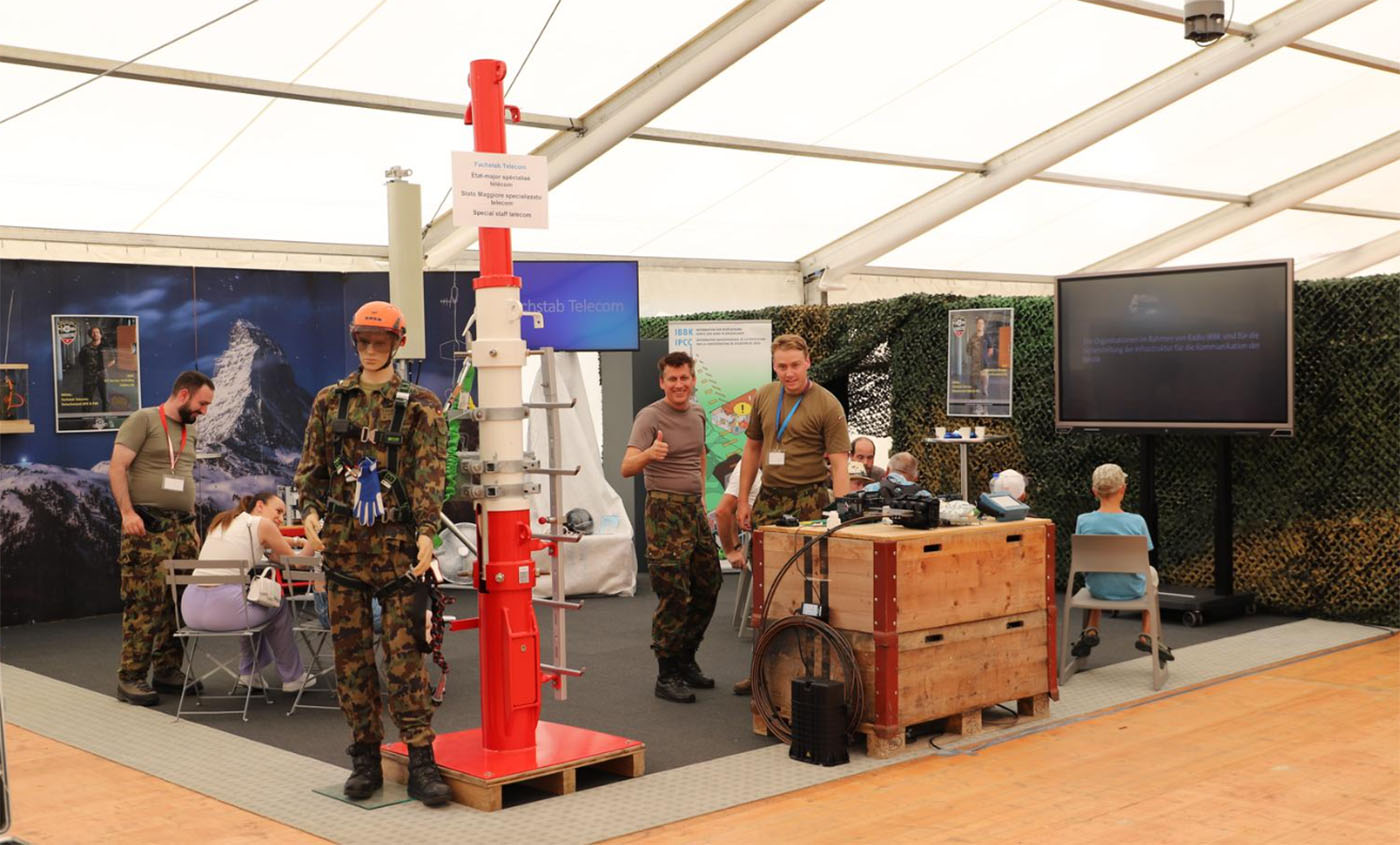
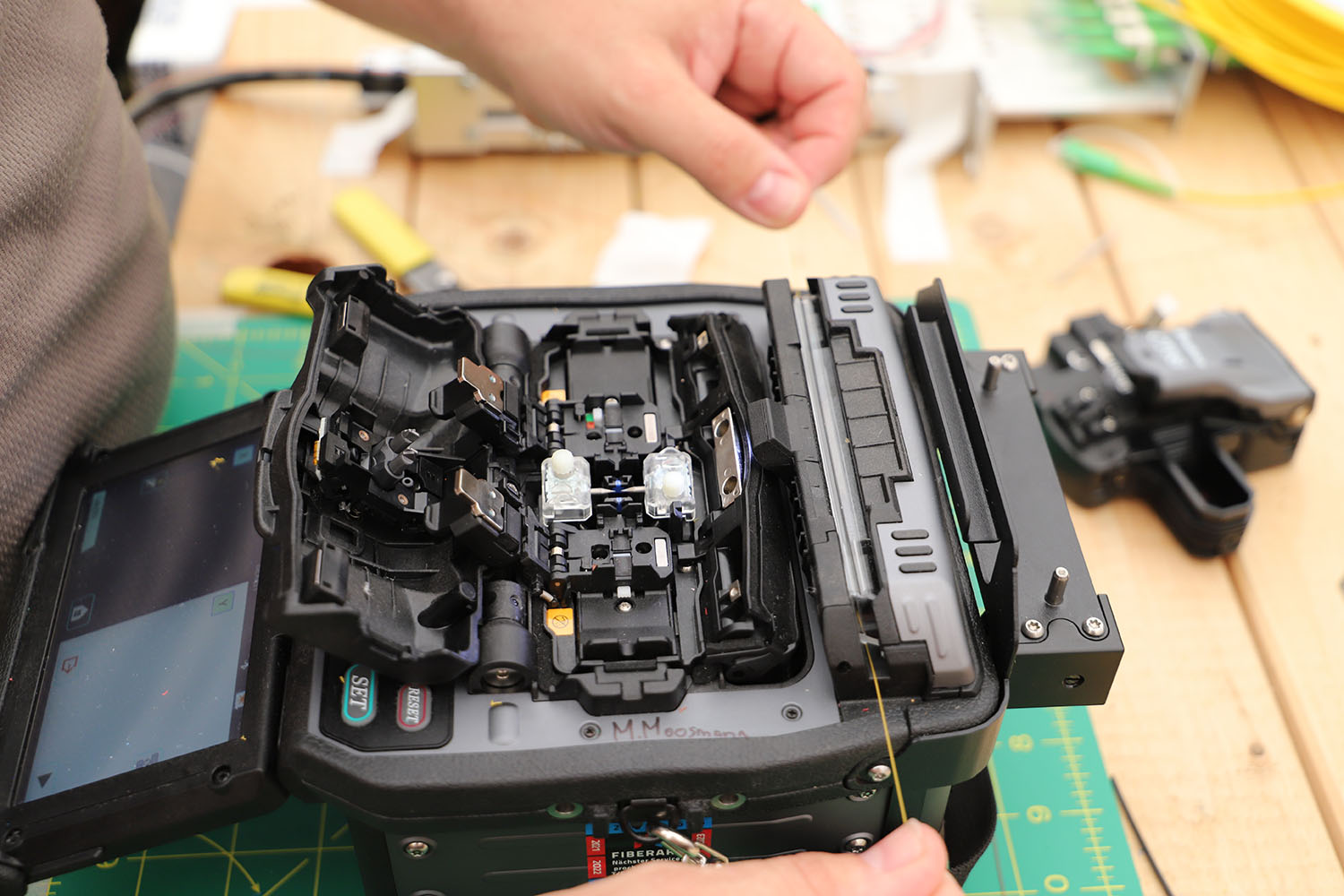
Swisscom repeatedly supports national mega-events, where it's not just about putting up the tents and providing the food - without the right IT infrastructure, nothing works these days. Fiber optic cables have to be laid quickly. The individual stands require a WLAN or LAN network and the video surveillance solution - certain sectors are monitored for security reasons - also needs a network. Last but not least, visitors also want to be able to use their smartphones without restrictions, no matter how many cell phones log into the surrounding antennas.
If the army is involved in the event, the Telecom department can take on this herculean task. Major Stefan Binggeli, radiation protection safety officer at Swisscom, is not unnerved by a mega event like Connected 2023 with 85,000 visitors. “The Telecom department specializes in these tasks,” explains the project manager. The big difference compared to other militia formations: The members of the army (AdA) in the Telecom department also carry out the same tasks in civilian clothes - but then on behalf of Swisscom. "All AdA in our specialist staff work for Swisscom or its subsidiaries Swisscom Broadcast and cablex. They know each other from normal everyday working life - this means we are extremely efficient from day one. The only thing that makes us sweat is record summer temperatures like this year at Connected," smiles Major Stefan Binggeli.
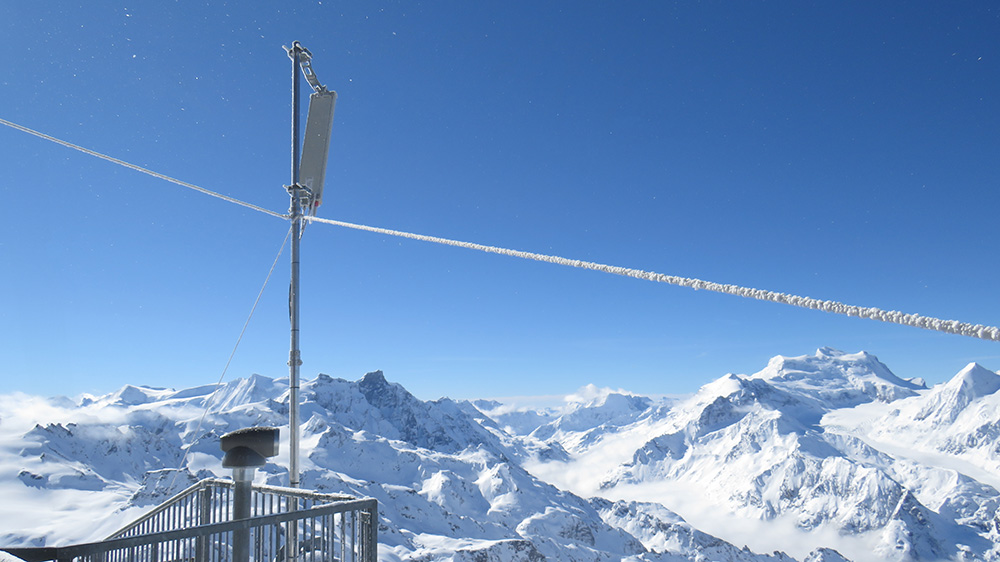
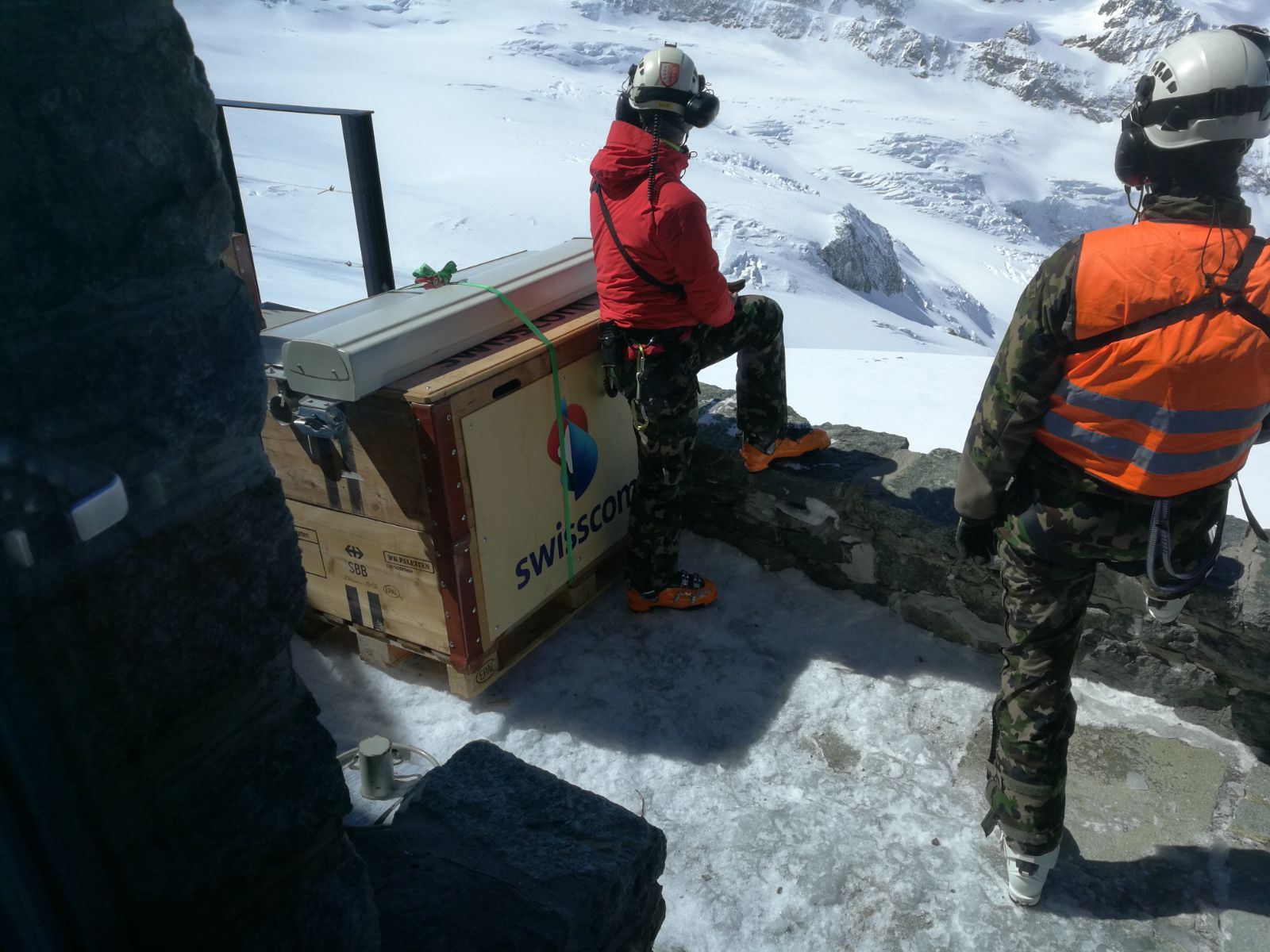
The members of the Telecom specialist staff are on duty even in freezing temperatures. For example, at the infamous Patrouille des Glaciers in the Valais Alps. The world's largest ski mountaineering race is organized by the military; military and civilian patrols with three athletes each can take part. The toughest ski touring competition in the world requires an infrastructure that you can rely on 100 percent for the safety of everyone involved. That's why members of the Telecom department are also on duty here. In 2022, the Swisscom employees in green were responsible for the temporary mobile network at six altitude locations, some over 3,000 meters above sea level, in difficult high alpine conditions. Thomas Körkel, Operation & Escalation Manager at Swisscom in civilian life, remembers: "On the last patrol of the Glaciers, the Air Force transported more than two tons of material into the mountains for us: base stations, antennas, repeaters and other telecommunications equipment. The construction and Operating the network at these altitudes is a big challenge for us and for the technology." Another area of application for the Telecom specialists is the provision of trackers: Every patrol carries a small tracker. Not only do the organizers know who is where in the high mountains, but the athletes can also make an emergency call if they are in trouble.
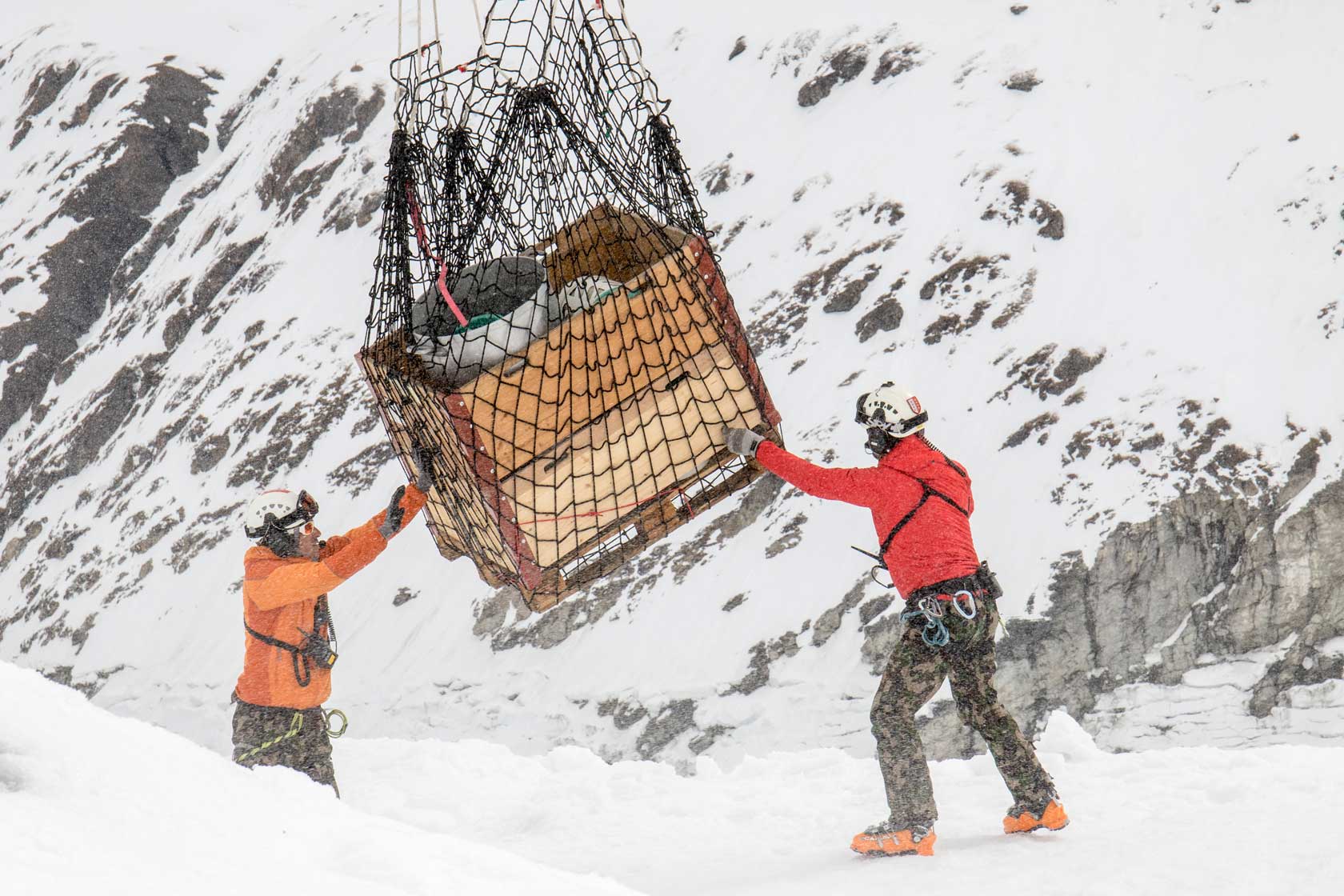
Ultimately, however, such operations are nothing more than practice for emergencies. Both the Event Connected 2023 and the Patrouille des Glaciers are military courses, so-called WKs. In 2011, however, the landslide above Bondo involved a real mission. After the telephone exchange was completely destroyed, the Telecom specialists had to set up a base station as quickly as possible and integrate it into the network. This was the only way the emergency services and the population could communicate again.
Ensuring that the federal government “informs the population in crisis situations via radio” (IBBK) is also one of the tasks of the specialist staff. In special and extraordinary situations - such as a nuclear power plant malfunction or a large-scale power outage - the authorities can reach the population in the protective facilities using the VHF radio emergency transmitter network. Major Christian Klinger, Head of Operation & Service Management at Swisscom Broadcast, is responsible for IBBK operations. “Since you never know when an extraordinary situation will arise, the IBBK radio infrastructure is always on standby,” says Christian Klinger.
The mood in the Telecom department is very special, he says. "The camaraderie in the military is incomparable. When things get hot, everyone lends a hand - regardless of whether they are a soldier or a lieutenant colonel. We are very lucky to be able to transfer this camaraderie into our everyday business."
The Telecom Brigade was established in 1866 and consisted of over 6,000 army personnel. As soon as a conscript signed with the then PTT, he was automatically assigned to the Telecom Brigade. That only changed in 2004 with the privatization of PTT and its renaming to Swisscom. The Telecom Brigade was disbanded and reorganized into Army Staff Section 360 with a number of 200 AdA. The Telecom department was created in 2011. It consists of the fiber optic cable, IBBK and voice communication detachments. Around 100 employees of the Swisscom Group are now part of the Telecom department.