Autonomous driving

City logistics reimagined – Swisscom connects highly automated delivery vehicles from Planzer and LOXO

Robotaxis, highly automated delivery vehicles, driverless shuttle services… What sounded like science fiction just a few years ago is now starting to become our lived reality, right here in Switzerland. This boom in development is largely thanks to the new laws surrounding autonomous driving that came into force in March 2025, giving innovation in the mobility and logistics industries a binding framework.
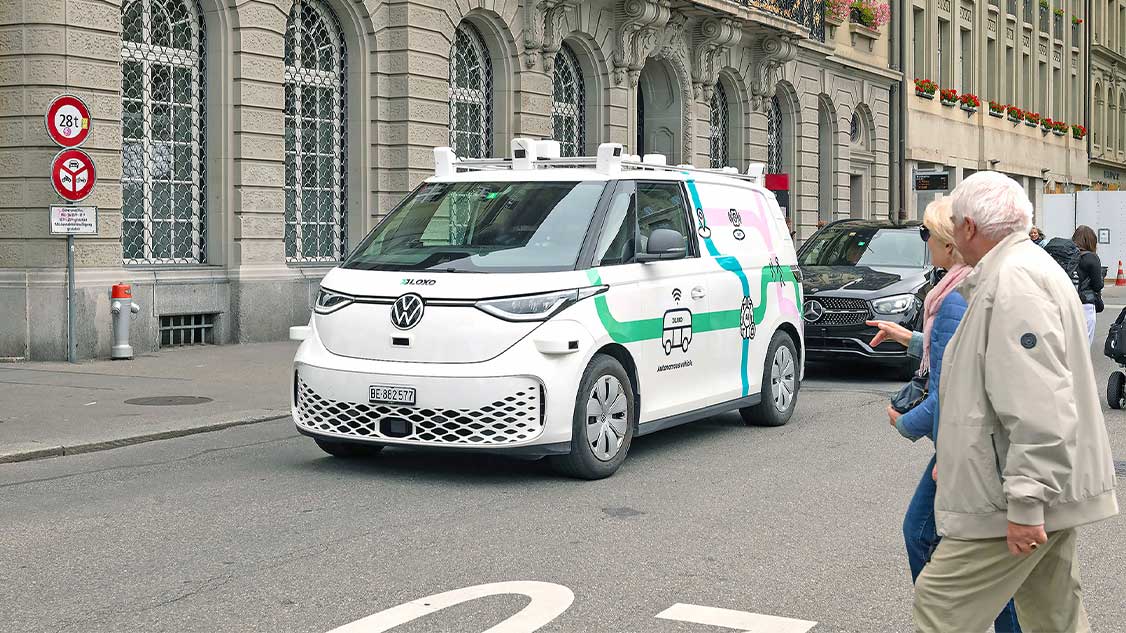
The picture shows Planzer's delivery van driving through a city

Swisscom is playing an active role in this shift, having been brought on board as a technology partner to a pilot project run by Planzer and LOXO. Together, the three companies are testing a pioneering solution for city logistics. One that is electric, highly automated and connected.

A beacon of a pilot project

The project is based around an all-electric Volkswagen ID. Buzz that has been fitted with the LOXO Digital Driver™ navigation software and two interchangeable boxes for transporting packages from the Planzer railway centre. Dubbed ‘Mathilde’ in homage to Mathilde Planzer, the wife of the company founder, she takes packages from the Planzer railway centre in Bern to distribution points around the city. From there, small electric vehicles take them the last mile to the end customer.

Each party brings a unique skillset to the project. LOXO has technological expertise as a pioneer in the field of highly automated vehicles, while established logistics service provider Planzer offers the necessary operational infrastructure. As the technology partner, Swisscom is using its state-of-the-art connectivity solution and technical expertise to ensure that Mathilde is always reliably connected.

Reliable and innovative technologies are crucial to the success of this exciting transformation in the field of freight mobility. For the technology to be implemented properly, highly autonomous driving requires not only the sensors and algorithms built into the vehicle, but also access to a highly reliable, low-latency mobile network. Prioritised network access is a key way of increasing reliability in an already overloaded mobile network. And this is where Swisscom has focused on its communication concept for this highly autonomous vehicle.

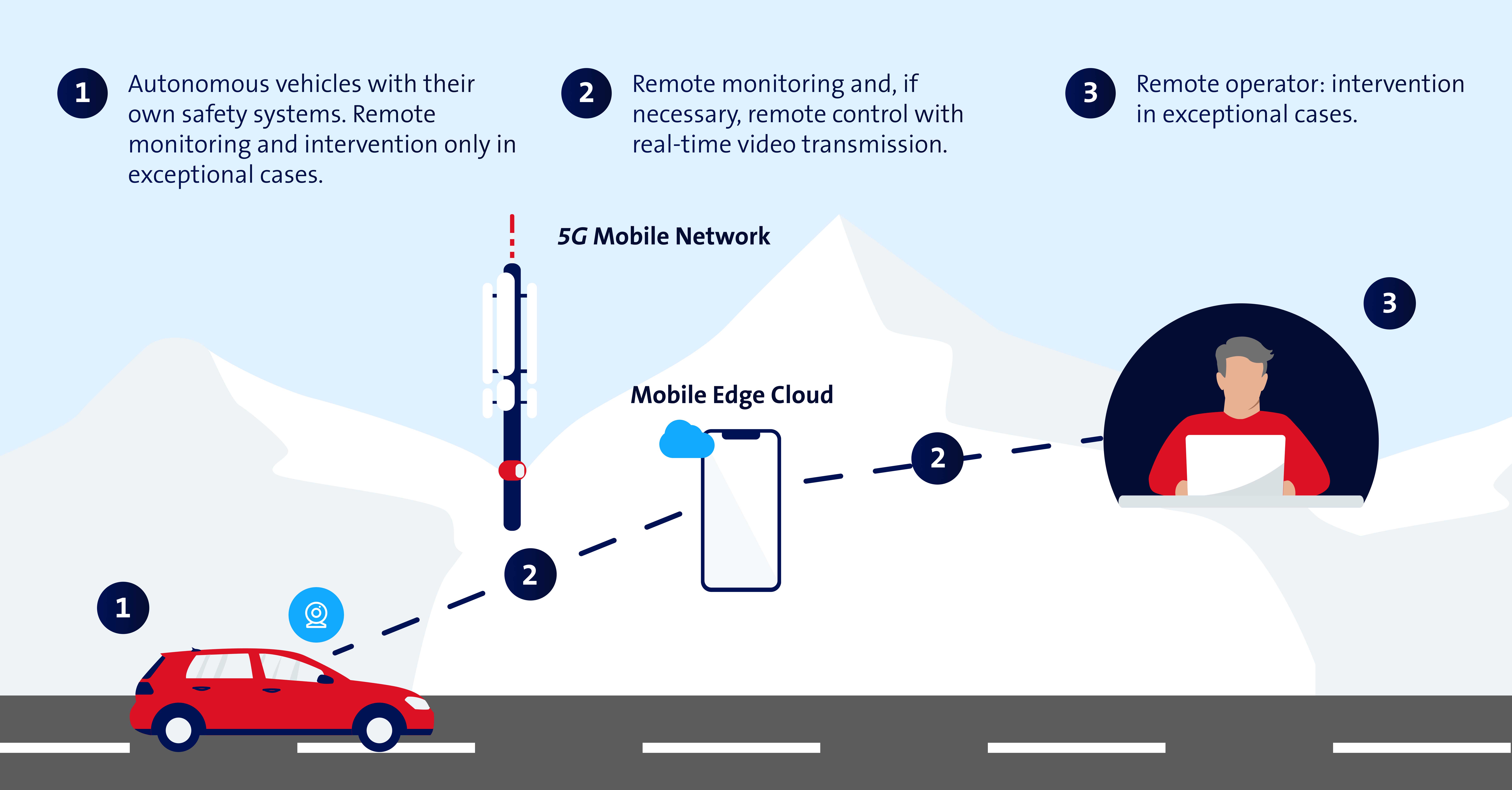
Mathilde is fitted with a prioritised SIM card to give her preferential treatment in the mobile network. This keeps the connection stable even when the network is under heavy load. An additional teleoperation system means that a remote operator can take control of the highly autonomous vehicle if necessary. Here again, a stable mobile network connection is critical for the operator to be able to ‘drive’ the vehicle safely.

The graphic shows how the vehicle can be controlled remotely

Initial tests have shown that the latency and reaction times meet the project’s requirements. Further findings from these tests will now be integrated into the next phase of the project, which will see LOXO and Planzer’s network architectures analysed in greater depth, and the connection to the remote operator control centre looked at in further detail.

“In this case, as always, our customers’ specific requirements are at the heart of what we do. We’re adding our expertise in mobile network and radio technologies, deploying a dedicated project team and focusing on providing reliable connectivity as a central element of this highly autonomous driving solution. We’re working together to analyse test results, develop specific suggestions for improvement and bring our expertise right to where it’s needed. This project demonstrates what’s possible when a dedicated team pulls together.”
Tugba Eryilmaz, Lead Business Development 5G & MPN, Swisscom

Staying safe on the road – even when the network fails

There’s one thing a highly autonomous vehicle always has to be able to do: react safely. This is why key driving functions like detecting obstacles, steering and braking are set up with real-time processing and local functionality right in the vehicle itself – controlled by sensors and local processing units. The vehicle is always able to (re)act, even if the network connection is temporarily interrupted.

Connectivity – whether for receiving the latest traffic information or interacting with other road users (V2X) – is an important supplemental feature, but not essential for basic driving functions.

This shows that highly autonomous vehicles are designed for safety above all else – with local intelligence, sophisticated emergency scenarios and a robust architecture.

Swisscom – focused on mobility solutions for tomorrow

With its technological excellence, innovative partners and involvement in sector-wide initiatives such as the SAAM (Swiss Association for Autonomous Mobility), Swisscom is actively engaged in the development of highly autonomous driving. From city logistics to shuttle services, motorways and railways, Swisscom uses scalable, intelligent connectivity solutions to keep highly automated systems securely and reliably connected – now and into the future.

Contact us

Media Relations

media@swisscom.com
Tel. +41 58 221 98 04

Latest news about Swisscom